North and west of the Iceclaws, beyond the domain of the Frost Giant Jarls, is the great step of Zara. This vast chilly grassland is home to a civilization of Child sized humanoids, with hairy limbs and keen reflexes. A hardy race, these people make a living as the tenders of large herds of wild and semi-wild ponies that live on the steppe.
These nomads have in recent years discovered a reliable pass through the Iceclaws, down into the peninsular. As a result they have opened the first land Trade route between the east and the peninsular, which has brought tremendous new wealth to Highmarch, the Halflings and the kingdoms of the continental north west.
Halfling
The term halfling is the usual term used by these people to describe themselves, it means Free-People, and has strong positive connections with their nomadic life style, their refusal to engages in arable agriculture (which they distain), and their adherence to the Path of Freedom, their non-theistic religion.
It is, by coincidence, a term in several of the closely related languages of the northern peninsular that even though it has no recorded use before the arrival of the Halflings, sounds like it should be applied to them, as a description of their diminutive stature.
Culture and Religion
The Halflings as a culture do not worship gods, and in fact, they considers the idea that people believe in them at all somewhat quaint. That does not mean that they lack a religion, however. They are strick adherents to the Path of Freedom, a non-theistic religion which blends an ethical code, with economic theories and anarchist philosophy. The Path of Freedom is non-hierarchical and has no priesthood.
Laws are to followers of the Path of Freedom, a form of blasphemy; the idea that they should submit to accept the rule of another goes against the entire nature of the Path. Yet, the pony people of Zara experience no more and no less violence against the person or theft than most people living in the law bound nations of the peninsular. They are as a group largely self governing. While they have no central government or ruler, the people of Zara, are uncommonly communal. While they have a good deal of personal property, they do not accept the ownership of natural resources or land as a legitimate concept, for the Path of freedom asserts that the ownership of land is fundamentally impossible, and those who claim to are tyrants. This has caused more than a little social conflict between them and the humans of the penicular, as the people of Zara have travelled further into their lands.
Sex and Gender
The halfling are very much more sexually dimorphic than humans or elves. Males tend to be about six inches shorter, considerably more slender, and skittish. Their eyes tend to be further set appart, and their ears about half a big again as females. Females tend to be stouter, tougher more gregarious, and less easily startled.
Before the formation of the way of Freedom, Halfling society was one of totalitarian rule by a now dead religion that enforced concreate gender roles and selective breeding in the Proto-halflings. Males are born to be scouts and craftpeople, while females defenders of hearth and home, as well as the hunters of large prey.
The pressures that once were placed upon the species, may no longer be present, but the gender roles of their society, are so deeply engrained as this point that it is rare that anyone within the society questions it. Despite a significant imbalance of power within the society, favoring females, the society is relatively benign and stable.
Friday, 16 October 2015

Thursday, 15 October 2015
5e Setting Building: Making Orcs matter; or how to improve on Genocide FTW.
The border marches are about tough
choices. Orcs don’t represent a tough choice. When I say Orcs here, I am in
fact using them as a stand in for all sentient monstrous species who are
bipedal, social, land dwellers. Creatures such as goblins, kobold and gnolls,
as well as orcs.
The traditional approach to dealing with orcs and their ilk can be summed up as "committing war crimes against a sentient species because you happen to be in resource competition with them; while not considering it evil, because they are evil because we happen to want the same thing as us and happen to be less good at killing us than we are at killing them", or as I like to put it for brevity “Genocide, FTW.”
There is a school of thought that, orcs and other such social sentient humanoid
foes should be treated as bad guys and that critical examination of their role
in the game should not be undertaken because, as Charles Akins , author of the Dyvers
blog puts it, “It's not that complicated. The monsters are evil because we're
the good guys and fuck 'em because they're not us.”The traditional approach to dealing with orcs and their ilk can be summed up as "committing war crimes against a sentient species because you happen to be in resource competition with them; while not considering it evil, because they are evil because we happen to want the same thing as us and happen to be less good at killing us than we are at killing them", or as I like to put it for brevity “Genocide, FTW.”
That approach is fine. If people want pure escapism, and aren’t interested in examining such elements and the ways it mirrors the behaviour of European colonial behaviour by dehumanising and demonising indigenous populations, that is cool. There is for many people, a lot of fun to be had in that.
But what this approach to orcs certainly does not involve is tough choices. You turn up, you kick their butts and you save the village, everyone it totally okay with the massacre because they are the bad guys and that the end of it.
Not my idea of fun.
For great social justice (and you know, fun).
Clearly, Orcs and their ilk, need to be handled
differently if they are going to be useful for the bordermarches.
For one thing, the whole turning a blind eye to Genocide
FTW thing kind of urks me. There are those who will genuinely claim that it is
morally good for characters to kill communities of orcs in games, because they
are “evil”, and the PCs are good. There have been plenty of points in earth’s
history when one group of hairless monkeys have massacred another such group
with almost exactly such an argument. Ignoring that annoys me.
So what to do with them instead? The most obvious
approach would be to not include them, but frankly I have included two whole-dimension
for weird species of monster to inhabit, and such creatures run deep in DnD lore.
A second approach would be to focus on developing orcs as a rich and vibrant
culture, to challenge the way that people the players interact with them. But,
honestly, if the players are going to choose to commit war crimes for fun and
profit, getting them to face up to their characters actions is going to be much
easier if their targets are humans, (or at least without the baggage of
traditionally evil species.)
What is the best way to change this? Create a different story model for orcs, one that allows for the fun of a dungeon crawl, but adds interesting questions.
What is the best way to change this? Create a different story model for orcs, one that allows for the fun of a dungeon crawl, but adds interesting questions.
Orcs are the symptom, not the disease.
 |
| CC BY-SA 3.0 |
This plague continues so long as the underlying conflict affects the community. Given the hidden nature of these conflicts, it is often difficult to resolve an ongoing orc incursion. No matter how many are killed, the problem persists However, adventurers who delve into the fey realm, are able fight their way into the heart of an orc blight, down into the caverns. There in the dark and rot, they may find the Blightheart, a physical object, from the material world, which signifies the underlying conflict. Blighthearts can be used to identify the cause of the conflict and overcome the orc blight.
Orcs have pig snouts! No, they don’t.
As fey creatures, the exact details of the appearance of
orcs vary wildly. Their tends to be consistency within a blight, but between
blights there can be drastic differences. Their skin tones can be almost any
colour, they can have pig snouts or tusk, they can appear oddly human. No two
are exactly alike, and not two blights are the same. However, they always appear
large and brutish.
Wednesday, 16 September 2015
5e Setting Building: Changelings; both Fosterlings and Fetches
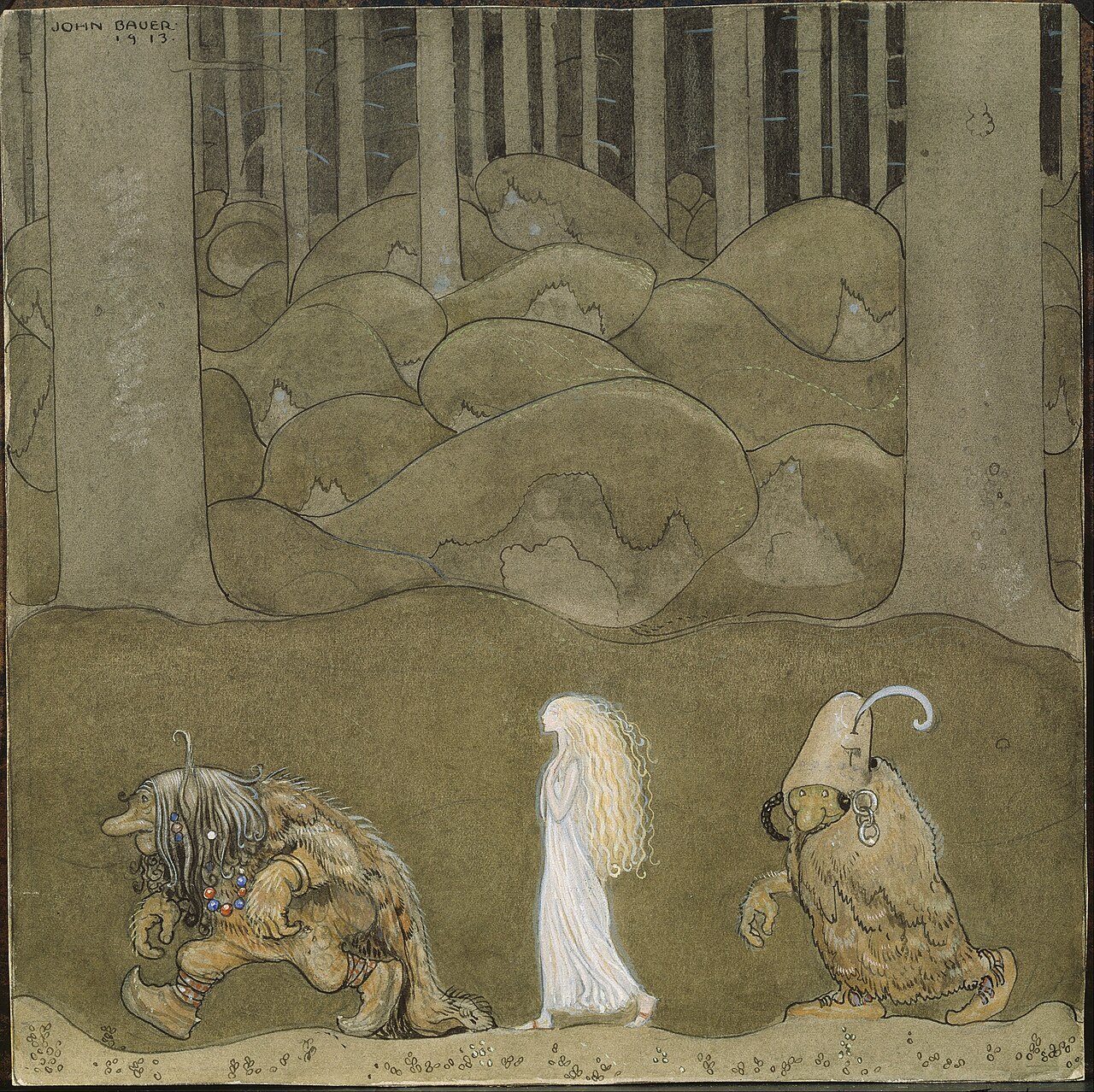
Come away, O, human child!
To the woods and waters wild
With a fairy hand in hand,
For the world's more full of weeping that
To the woods and waters wild
With a fairy hand in hand,
For the world's more full of weeping that
you can understand.
- W. B. YEATS
- W. B. YEATS
The creatures of the Fey Realm have no children; they spring full formed into adulthood from the stuff of that realm. Many kith and many kin feel the generative instincts, which are frustrated by their very nature.
The result are the Fosterlings and the Fetches
The result are the Fosterlings and the Fetches
Fosterlings
Occationally a fey creature adopts a new born human child, taking them into the Fey Realm. The children are treated to lives of luxuary and wonder than no normal human child can ever hope for. Feed on magic and stories their entire youth, they mature into creatures indisputably fair and great talent. Each and every one has the potential to be a great hero or villain. However, this talent is almost always turned to the exploration of the hundred and one great tales of the the Fey Realm, where the fosterling may live a life of constant adventure, safe in the knowledge that nothing that they do not expect will ever happen, for it is in the nature of the Fey Realm to conform to the rules of stories, and for the fosterlings to be treated at their ultimately invulnerable protagonists. For some the few however, these adventures hold little appeal. There is no risk of failure, nor truly any opportunity for the outcomes of them to be meaningful. So it is that some jaded fosterlings emerge into the material world, where they almost innevitably take it upon themselves to become wandering heroes or terrible villains of some kind. They are almost always jaded creatures, soured on any earthly pleasure by a lifetime of wonders
Fosterlings are not only changed by their experiences. The very nature of the fey realm alters their morphology. Their visage is shaped into an exagerated example of the way that a local culture describes beauty in their folk tales. Thought in almost all cases ears become elongated and pointed. They also tend toward Neoteny. Which gives their beauty an alien and uncomfortable quality.
Fosterlings are not only changed by their experiences. The very nature of the fey realm alters their morphology. Their visage is shaped into an exagerated example of the way that a local culture describes beauty in their folk tales. Thought in almost all cases ears become elongated and pointed. They also tend toward Neoteny. Which gives their beauty an alien and uncomfortable quality.
Fetches
When the fey adopt human infants, it is often without the consent of the infants parents. Most fey who take children in this manner leave in the place of the child a fey construct, known as a fetch.
These creatures a small carved wooden dolls in the rough form of the child. They are animated with rough spun enchantments, and most last only a few weeks or months. This is not out of malice on the part of the fey, so much as their misunderstandings about the the material world.
A rare few, however, survive to maturity. They are forever other. Separate from the members of their community and intrinssically aware their nature is a secret. They often seem distant to those around them.
Friday, 21 August 2015
5e Setting Building: Dwarves; the sons and daughters of Tir Varnrag
When the people of the borderland speak of Dwarves, they think of the The Dwah of Tir Varnrag. They are creatures of myth and legend, peerless smiths. Tireless miners, greatest artificers of any world, but cursed by their fey nature too.
So meeting one of the creatures who on occasion walk the physical world referring to themselves as dwarves, comes as a shock to most. For legends are not meant to walk the land, nor should they insist on doing so, should they so thoroughly confound the tales that are told of them.
But every so often, that is exactly what happens.
Every so often, a handful of short but tough creatures with the look of the fey emerge into the world. They travel widely, have adventures, learn all manner of things, for a hundred years or more. Then, as suddenly as they appeared, they disappear back into the Fey Realm.
They describe themselves as the sons or daughters of Tir Varnrag, but the importance of this statement is lost on humans. For The Dwah are not born, nor do they breed as man would know it. Rather they spring full made from the stuff of the feyrealm, and disappear just as quickly if no one is paying attention. Understanding why the Dwarves call themselves the children of Tir Varnrag is the secret to their existence.
The Dwah are the greatest of all artisans, no other hand can craft so finely as theirs. Their work is perfect and none may claim it is other wise. But they are cursed, for while their work can be surpassed by no other, in terms of quality, even the lowliest child can surpass them in creativity. The Dwah are entirely incapable of creative thought or invention, it is simply not part of their nature. They do not learn, and cannot innovate in anyway, rather, if the knowledge of how a thing is crafted, exists as a schema, within the the book of iron, at the heart of Tir Varnrag, they simply know how it is done, and they can produce it, in its most perfect form.
This truth is a large part of why it is that the Dwah are always gruff and angry, for their failure is well known to them. Every so often, when confronted with something new, the Dwah, must confront their inability in a very personal and intimate manner. As attempt after attempt fails, they find themselves growing angrier and angrier. Eventually, they will start to hammer at some part of their own being, usually a hand or a foot, and they beat it and beat it, until it is useless. That achieved, they cut it of, and beat it some more. Though they do not intend it, they shape that flesh into a new born baby. This new child, is a dwarve, and such creatures are usually raised by members of other fey races until they are old enough to hold a hammer. The Dwah being ageless artisans who come into existence as ancient and grumpy have little understanding of children, and will as soon as the child appears able to hold a tool, try to put them to work. It is at this stage that the Dwah discover the most horrifying thing about their children. The new born dwarf does no know how to perform any craft, let along anything else. To the Dwah, this is unthinkable and a source of great shame.
It is for this reason that the children are called Dwarves, for it is a term that in the tongue of Tir Varnrag means "poorly formed". Despite this, Dwarves are blessed in ways their parents are not, for they can learn and innovate.
They often feel the call of adventure strongly, and enter the physical world, to their learn and experience new things. Over the course of the next hundred to two hundred years, they learn new things and engage in much excitement, before returning home, and their forge all the new techniques they have learned in iron, adding them to the sacred book.
Before you go, check out todays world building blog on the progess with the town of Mistley

So meeting one of the creatures who on occasion walk the physical world referring to themselves as dwarves, comes as a shock to most. For legends are not meant to walk the land, nor should they insist on doing so, should they so thoroughly confound the tales that are told of them.
But every so often, that is exactly what happens.
Every so often, a handful of short but tough creatures with the look of the fey emerge into the world. They travel widely, have adventures, learn all manner of things, for a hundred years or more. Then, as suddenly as they appeared, they disappear back into the Fey Realm.
They describe themselves as the sons or daughters of Tir Varnrag, but the importance of this statement is lost on humans. For The Dwah are not born, nor do they breed as man would know it. Rather they spring full made from the stuff of the feyrealm, and disappear just as quickly if no one is paying attention. Understanding why the Dwarves call themselves the children of Tir Varnrag is the secret to their existence.
Born from frustration.
The Dwah are the greatest of all artisans, no other hand can craft so finely as theirs. Their work is perfect and none may claim it is other wise. But they are cursed, for while their work can be surpassed by no other, in terms of quality, even the lowliest child can surpass them in creativity. The Dwah are entirely incapable of creative thought or invention, it is simply not part of their nature. They do not learn, and cannot innovate in anyway, rather, if the knowledge of how a thing is crafted, exists as a schema, within the the book of iron, at the heart of Tir Varnrag, they simply know how it is done, and they can produce it, in its most perfect form.
This truth is a large part of why it is that the Dwah are always gruff and angry, for their failure is well known to them. Every so often, when confronted with something new, the Dwah, must confront their inability in a very personal and intimate manner. As attempt after attempt fails, they find themselves growing angrier and angrier. Eventually, they will start to hammer at some part of their own being, usually a hand or a foot, and they beat it and beat it, until it is useless. That achieved, they cut it of, and beat it some more. Though they do not intend it, they shape that flesh into a new born baby. This new child, is a dwarve, and such creatures are usually raised by members of other fey races until they are old enough to hold a hammer. The Dwah being ageless artisans who come into existence as ancient and grumpy have little understanding of children, and will as soon as the child appears able to hold a tool, try to put them to work. It is at this stage that the Dwah discover the most horrifying thing about their children. The new born dwarf does no know how to perform any craft, let along anything else. To the Dwah, this is unthinkable and a source of great shame.
It is for this reason that the children are called Dwarves, for it is a term that in the tongue of Tir Varnrag means "poorly formed". Despite this, Dwarves are blessed in ways their parents are not, for they can learn and innovate.
They often feel the call of adventure strongly, and enter the physical world, to their learn and experience new things. Over the course of the next hundred to two hundred years, they learn new things and engage in much excitement, before returning home, and their forge all the new techniques they have learned in iron, adding them to the sacred book.
Before you go, check out todays world building blog on the progess with the town of Mistley

Thursday, 20 August 2015
5e Adventure Building:Introduction and brainstorming setting intro adventure
World building a great! But world building with a purpose is better. In the posts to follow, I am going to start building encounters and adventures set in the borderlands to delight my players with.
Legacy of Adder's keep
Below you is a scan of my brain storming for legacy of Adder's Keep


Something that is really important to me as a GM, is that their be many paths to success.
If you your skill based encounters are achievable by a number of approaches, with different difficulties and different rewards, you have a situations where players are faced with meaningful choices. While they do the thing that offers them few rewards but they are unlikely to be challenged by, or while they take the greater risk and greater rewards. Will they make an enemy for the future to ensure their success today? It also rewards players who generalize rather than specialize.

For Adder Keep, I amd going to be using the Chainspire Fortress map by Dyson Logos.
 |
| Cartography by Dyson Logos is licensed under a Creative Commons Attribution 4.0 International License. |


Sunday, 16 August 2015
5e Setting Building: Proper nouns, Map making and the PCs initial base of operations.
Again we have a, with a region of northern Arnel being without name. Lets fix that right now. The river flowing through this area is the Ashwater, and the region is commonly known as the Ashwater vale.
I love mapping, and it is a huge chunk of what this project is all about. So, before we get further into describing the region, lets look at the progress in mapping it since last post.

I love mapping, and it is a huge chunk of what this project is all about. So, before we get further into describing the region, lets look at the progress in mapping it since last post.
 |
| This is where things were. Boarder and coastline drawn, grid added |
 |
| Base colours added, coast fractalised, rivers added. Grid made lighter |
 |
| First few roads added, along with the outline of one section of woodland |
 |
| More woodlands added, and base colour for woodland added. Villages added at a distance from each other of about a mile. |
Most of the detail is in the bottom right hand corner, it is in this hex that the campaign will begin, with the PCs arriving in Mistley. There are also the villages of Boxford, Borrow, Blackwell, Higham, and Ornley

Mistley
Mistley is a large village (on the cusp of becoming a small town) on the banks of the Ashwater, where it flows into its estuary. Mistley is going to be the first location that the PCs spend anytime, so it is going to need to be fairly well detailed, Which sounds like the kind of thing for another blog post, all it's own.
Friday, 14 August 2015
Augh!!! I am bored of high level planning....
...so lets get a little closer in and start thinking about where the campaign will start. So lets dig down into what the Province Scale of world building and look at the starting region. The campaign I am going to be running is going to to start in Northern Arnel, near the border with the bleakmarsh. Northern Arnel has been designed to be a place where traditional governmental structures have fallen to pieces, there by allowing PCs to fill that void, either creating a new aristocracy, or building towards something new. The form of this collapse is the destruction of a great many northern aristocratic families during the civil wars, the slow collapse and corruption of southern lines put in their place, and abandonment of the region by the south, who frankly have enough on their plate as it is. Were the high King even aware of the players actions, it is questionable if he would act on them in the early stages of their rise to power, thanks to his inherited delusional state.
Worse still, society is in a state of apocalyptic shock.The great plague killed 1 in 10 adult and 1 in 5 people under the age of 5, just fifteen years ago*, and this after only a hundred years of rest from a civil war that had been very nearly as devastating to the north. Even before this the north suffered huge economic privation, as the wealth of the nation concentrated in the south.
It is also a place rich in a history of connection with the fey and the dead, but with relatively weak modern understanding of it thanks to the witchhunts sponcered by High King Tobin and his decendents.
All these fact make for a place that desperately needs saving, and a political climate might actually allow a few mercenaries to become the solution
Scale
Worse still, society is in a state of apocalyptic shock.The great plague killed 1 in 10 adult and 1 in 5 people under the age of 5, just fifteen years ago*, and this after only a hundred years of rest from a civil war that had been very nearly as devastating to the north. Even before this the north suffered huge economic privation, as the wealth of the nation concentrated in the south.
It is also a place rich in a history of connection with the fey and the dead, but with relatively weak modern understanding of it thanks to the witchhunts sponcered by High King Tobin and his decendents.
All these fact make for a place that desperately needs saving, and a political climate might actually allow a few mercenaries to become the solution
 |
| Kingdom Scale placeholder map for Arnel, Alass and Norren (most of). Highlights initial area of play |
As by now, you may have guessed, this is going to be a sandbox campaign. Which means lots of overland travel. Two considerations come of out of this at this stage, scale and environment.
 |
| First WIP of region level map of initial play area. |
Scale
When planning a Sandbox, getting the scale right is important. You get it wrong and you end up with a setting that makes no earthly sense. To date, the best scale I have found is the six mile hex, with half mile sub-hexs. It is worth checking out this post from Steamtunnel's blog "hydra's grotto", which explains the advantages of the six mile hex far better than I ever could.
Environment
The area in which the campaign kicks off, is going to be the watershed of a river, roughly equivilant to the river stour on the essex and suffolk border, here in the UK. The Stour is known for the painting of the english artist John Constable.

I grew up a short walk from the river, and the areas lush meadows and gently rolling hills hold a special place in my memory. The stour is also interesting for it is in many ways the border of civilisated influence in east anglia. Once you pass the river valley; the land, while still mostly cultivated, becomes wilder and wilder. The influence of the northsea on the wealther and feel of the land grows as you travel eastwards. Woodlands grow larger, heath and fen become more common and houses ever rarer. It is a mixture of these two elements I wish to weave together in this place. It should be a place of great beauty, but also isolation and bleakness.


Next time, I will be talking about the geography of the watershed, and detailing some of it's landmarks.


Subscribe to:
Posts (Atom)